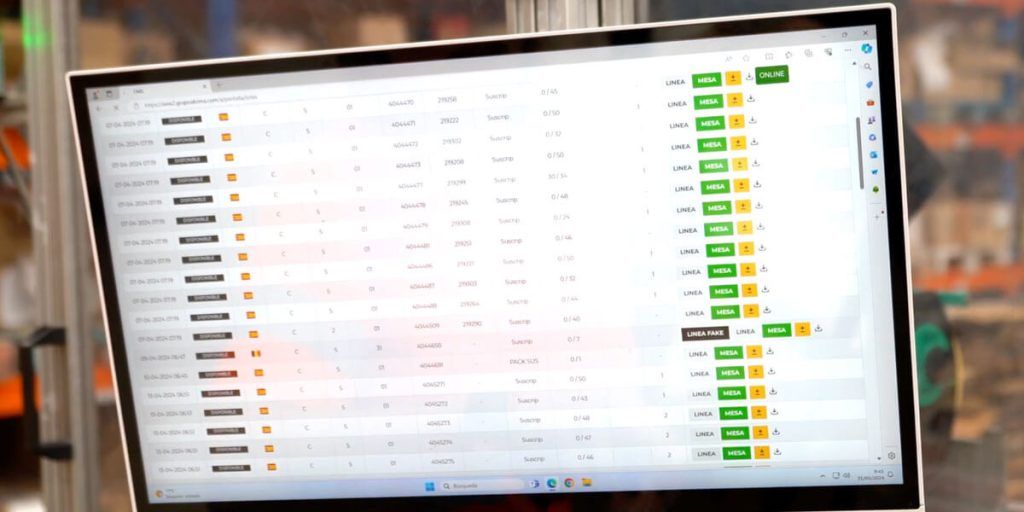
The real impact of the FIFO method on stock management
The FIFO method (First In, First Out) is a basic inventory management principle for any supply chain manager. It consists of ensuring that the first goods to enter the warehouse are the first to leave. It sounds obvious, but applying it systematically in complex facilities requires rigorous planning.
If you manage perishable products, stock with short expiry dates or items subject to rapid seasonal changes, FIFO is not an option. It is an operational necessity. It prevents the accumulation of obsolete stock and drastically reduces financial waste.
How the FIFO workflow works in the warehouse
For the FIFO principle to work on a day-to-day basis, the physical layout of the warehouse and the management system (WMS) must work in sync. It is not enough to place the goods just anywhere. Operators need separate loading and unloading aisles or live storage racking systems.
In highly regulated sectors, such as the cosmetic logistics, batch traceability linked to FIFO prevents serious regulatory compliance issues. If you work under strict quality regulations, you can check our detailed guide on the ISO 22716 standard to understand how it affects handling and storage processes.
Operational advantages of applying FIFO over LIFO
- Lower obsolescence: It minimises the risk of the product expiring or losing value on the shelf.
- Constant stock turnover: Capital does not get stuck in old references that nobody moves.
- Reliable traceability: By always dispatching the oldest batch, you simplify audits and quality control.
- Compliance with regulations: It is the standard required in industries such as food processing, pharmaceuticals and parapharmaceuticals.
When we compare this flow with demanding sales channels, inventory management becomes even more critical. You can check the operational differences in our analysis on e-commerce and traditional logistics to see how unit picking impacts stock turnover.
Challenges in implementing the FIFO Method
Implementing this method on paper is straightforward. Putting it into practice in a high-density pallet warehouse requires overcoming several operational obstacles:
The main problem is space. If you use conventional shelving and do not plan the locations well, operators can block access to the older merchandise. To resolve this, many facilities opt for compact storage systems like drive-through or live roller gravity-flow racking.
Another critical point is the training of dock personnel. An error in recording the entry date in the WMS system breaks the entire FIFO chain. The automation of barcode or RFID readings reduces this margin of human error.
When you should prioritise FIFO over other methods
Not all goods suffer the same temporal depreciation. If you manage non-perishable industrial products or metal raw materials without an expiry date, the cost of maintaining a rigorous FIFO may not add value. However, in sectors with constant turnover and a requirement for freshness or currency, it is the only viable path.
If you need to outsource your operations and are looking for logistics partners who master traceability and advanced stock management, you can see our ready facilities in our centre in Barberà del Vallès to optimise your supply chain.
Preguntas frecuentes
What does the acronym FIFO stand for exactly?
It means First In, First Out. It indicates that the oldest stock is the first to be dispatched or consumed.
In which sectors is it compulsory to use the FIFO method?
It is essential in the food, pharmaceutical and cosmetics industries, and in any industry handling perishable goods or products subject to an expiry date.
What is the difference between FIFO and LIFO?
FIFO issues the oldest stock, whereas LIFO (Last In, First Out) prioritises the dispatch of goods that have just entered the warehouse.
How does a WMS help to maintain FIFO control?
A warehouse management system automatically assigns locations and blocks the dispatch of new goods if stock from previous batches is still available.