Publishing logistics for new releases, catalogue and returns
Processes designed for the real dynamics of the publishing industry
Publishing logistics coexist with irregular cycles, constant returns and channels with their own requirements. The flow must adapt to date-bound launches, fragmented replenishments and intense peaks in campaigns such as Sant Jordi, Christmas or back to school.
Frontlist and backlist with opposite behaviours
New releases require speed and exact timeliness, while the back catalogue moves with a slow and lengthy rotation. Separating the two rhythms avoids inventory stress and ensures availability when each title needs it.
Time-sensitive campaigns and sales windows
Special days, trade fairs, presentations and seasonal events force you to keep a tight flow in the commercial calendar. Delays in these windows reduce the visibility of the title and directly affect your sales.
Returns that are part of the editorial model
The industry incorporates returns from bookstores and chains as standard practice. Integrating these returns into the flow without cluttering the inventory is key to maintaining reliable data and making the right decisions on reprints or balances.
What does our editorial logistics solution include?
The publishing operation requires a flow that maintains order between editions, formats and channels. Each phase is structured to keep pace with the industry without compromising inventory and title availability.
- 01
- 02
- 03
- 04
- 05
Reception with verification by edition and format
Titles enter with precise identification of edition, print run and presentation, avoiding crossovers between versions that share a name or cover.

- 01
- 02
- 03
- 04
- 05
Storage adapted to rotation and type of construction site
Novelties coexist with the editorial stock in locations that prioritise accessibility, avoiding unnecessary travel and downtime in campaigns.
- 01
- 02
- 03
- 04
- 05
Order preparation for bookshops, chains and online sales.
Picking is adjusted to the type of channel: fragmented orders for bookstores, large volumes for chains and single units for e-commerce, while maintaining consistency between them.
- 01
- 02
- 03
- 04
- 05
Continuous replenishment of the active catalogue
The editorial stock and long-lived references maintain a stable output that avoids breaks in works with discrete but constant rotation.
- 01
- 02
- 03
- 04
- 05
Integration with publishing systems and sales platforms
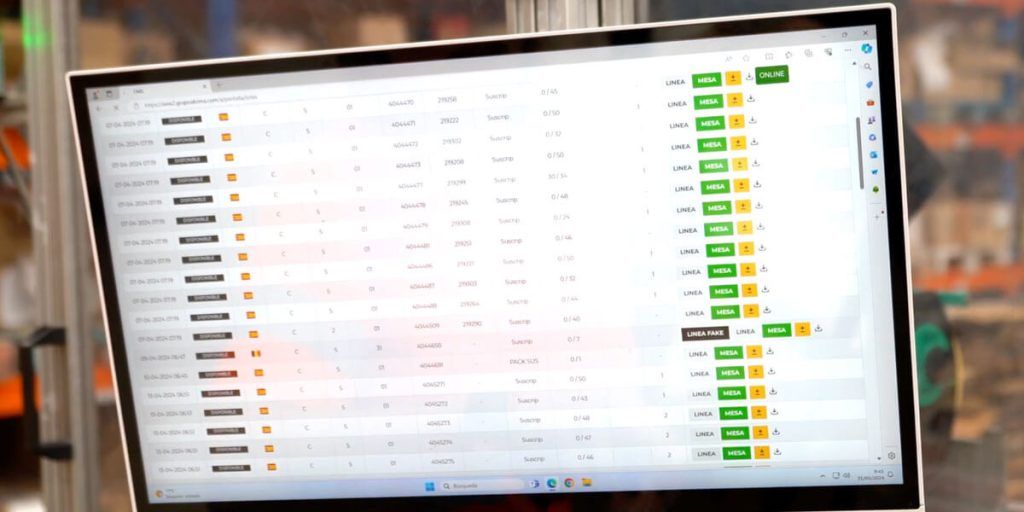
Stock and availability remain synchronised between WMS, internal systems and distribution channels, reducing mismatches that affect sales and reprint planning.
Presentation and status of the book along the route
The book is a product sensitive to knocks, rubbing and pressure. Its commercial value depends to a large extent on arriving with intact corners, clean covers and spines without visible marks. The flow adapts to this level of demand to preserve its presentation in bookstores, chains and e-commerce.
01
Physical protection from entry to dispatch
Titles move along paths that avoid impact, friction and loads that can deform covers, crush corners or mark backs.
02
Final packaging that maintains the integrity of the specimen
Packaging is selected according to the format, weight and destination of the order. This reduces damage in transit and ensures that the book can be displayed on a table or shelf without imperfections.
03
Preventing incidents that affect sales
The stability of the packaging reduces the risk of scuffing, folding or crushing, which leads to returns and reduces the visibility of the title in the shop.
Benefits of a specialised editorial operation
An operation prepared for the editorial rhythm reduces incidents, maintains stability at critical moments and ensures real availability of the catalogue. This makes it possible to sustain launches, campaigns and replenishments with reliable data and a flow that does not deviate.
- 01
- 02
- 03
- 04
Greater stability in key launches and windows
The punctuality of departures and replenishments avoids breakages during the weeks of highest visibility, maintaining the commercial momentum of each title.
- 01
- 02
- 03
- 04
Coherent inventories in comprehensive catalogues
The flow structure reduces mismatches and facilitates decisions on reprints, print runs and continuity of references with contained rotation.
- 01
- 02
- 03
- 04
Fewer losses due to channel or destination errors
Orders move to bookstores, chains and e-commerce with the planned structure, avoiding diversions that generate avoidable returns and loss of exposure.
- 01
- 02
- 03
- 04
Operational continuity in high demand campaigns
Christmas, Sant Jordi, school or fairs volume tips are integrated without altering the consistency of the service or generating tensions in the preparation.
Why publishers rely on this operation
The publishing sector demands precision in dates, order in large catalogues and a constant reading of the sales rhythm. Confidence is consolidated when operations demonstrate stability under pressure and clarity in the data that underpins launches and reorders.
Experience with synchronised launches and campaigns
Processes are adapted to fixed date deliveries and sales windows where timeliness determines the commercial outcome of the title.

Knowledge of editions, formats and work cycles
The structure of the editorial catalogue of new, backlist and reprints is integrated into the flow without losing the order between versions that share a name or cover.
Technology ready for large catalogues and multiple channels
The system keeps information visible to bookshops, chains, e-commerce and internal platforms, avoiding mismatches that affect editorial planning.
Operational robustness at times of peak volume
Trade fairs, seasonal campaigns or mass returns go ahead without disrupting the service, guaranteeing continuity even when demand is concentrated in short periods.
Frequently asked questions on editorial logistics
How do you manage a catalogue with thousands of active titles?
The system organises each reference by edition, format and life cycle, maintaining a clear structure even when new releases, back issues and works with very different rotations coexist.
What happens when a title needs reprinting or an additional print run?
The availability and output rate can detect when a job is approaching breakage. This information facilitates reprint decisions and avoids interruptions in campaigns or continuous replenishment.
How do you handle such different orders depending on the channel?
Each channel follows its own flow: single units for e-commerce, fragmented orders for bookstores and large volumes for chains. This avoids delays and reduces incidents at destinations with specific criteria.
Is the operation compatible with trade fairs, presentations or one-off events?
Yes, time windows are integrated into the operational calendar to ensure on-time delivery and maintain availability during peak visibility times.
How do you maintain stability when returns increase after a campaign?
Returns are integrated as part of the editorial calendar, avoiding clutter in the inventory and maintaining reliable data for future catalogue decisions.
Services and centres for publishers
Publishing services
Storage centre
- Storage warehouse in Barberà del VallèsAutomated silo and high-density storage
Where we operate
- Logistics provider in Barcelona4 company-owned centres in the Vallès and an in-plant operation in Montornès
- Our logistics centres
The fulfillment solution for
e-commerce of the Akoma Group
Bolian is Akoma Group's unit specialising in B2C operations, stock management, daily order picking and fast-paced shipping for online shops and direct-to-consumer models. Its flow is designed to absorb peaks, maintain consistent inventory and deliver accurately even when demand changes from one day to the next.

Do you want to extend your brand to a subscription model?
We have a specific flow for underwriting that maintains regularity, cash flow stability and forecasts recurring products.
Solutions by sector