Short answer: food logistics is the storage, order preparation and transport of food with control of batch, expiry date and storage conditions at every step. It is divided into three main types (dry or ambient, chilled and frozen) and relies on the traceability required by Reglamento (CE) 178/2002 (EU General Food Law), self-checks based on the APPCC (HACCP) system under Reglamento (CE) 852/2004 (EU food hygiene regulation) and health registration. In Catalonia, general operators with their own centres coexist with specialists in chilled and frozen storage: choose according to your product's temperature and your sales channels.
Transparency: this article is published by Grupo Akoma. Third-party data comes from their official websites and is linked under «Sources».
What is food logistics?
It is the part of the supply chain that moves food and drink from the manufacturer or importer to the point of sale, the restaurant or the consumer. It includes receiving, storage, order preparation, dispatch, transport and the management of returns and recalls.
Three things set it apart from general logistics:
- The product has a date. Every batch expires, and the warehouse must decide what goes out first according to that date, not according to when it arrived.
- Food safety is the responsibility of the whole chain. The operator that stores or transports the goods is also responsible for its part: hygiene, storage conditions and records.
- You must be able to trace the route back. If a batch has to be recalled, you need to know who you received it from and who you sent it to.
If you want to go deeper into internal operations, see our guide to food storage and traceability in the B2B chain.
What types of food logistics are there by temperature?
The product's storage temperature decides which operator suits you. It is the first filter, before proximity or warehouse size.
Dry or ambient
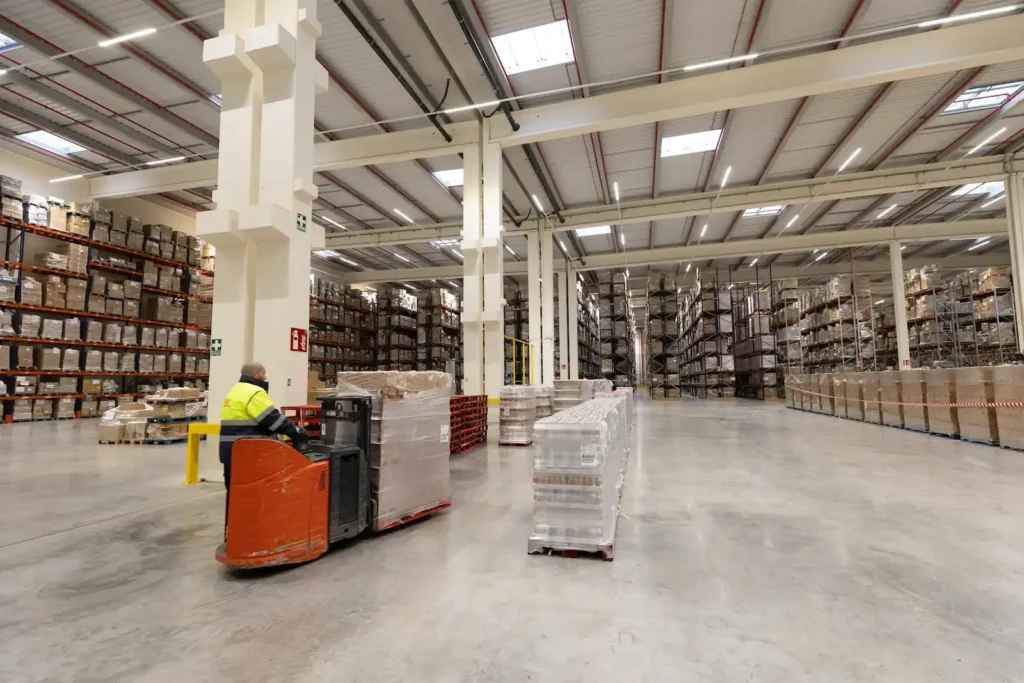
Tinned goods, pasta, pulses, oils, drinks, biscuits, coffee or snacks. They do not need a cold room, but they do need a clean, dry warehouse, protected from pests and with batch and expiry control. Here the challenge is volume, turnover and looking after the packaging. This is the territory of general operators with pallet storage with batch and expiry control.
Chilled (positive cold)
Dairy, fresh produce, meat, fish, ready meals, fruit and vegetables. It requires cold rooms and vehicles at controlled positive temperatures, with continuous recording. The specific ranges are set by the product specification and the specific regulations for each category.
Frozen (negative cold)
Ice cream, dough, frozen fish and vegetables. It requires negative-temperature cold rooms, docks designed not to break the cold chain and, often, order preparation inside the cold room itself.
Many brands combine types: one ambient range and another chilled one. In that case you can work with a multi-temperature operator or with two specialist operators, one for each range.
What requirements must a food logistics operator meet?
Traceability by batch and expiry date
The Reglamento (CE) 178/2002 states in Article 18 that traceability must be ensured at all stages of production, processing and distribution. The Spanish food safety agency AESAN sums it up as the «one step back, one step forward» approach: identifying your immediate suppliers and your immediate customers. In practice, the operator records the batch and date of each unit or pallet on receipt and links them to every order that goes out.
FEFO rotation
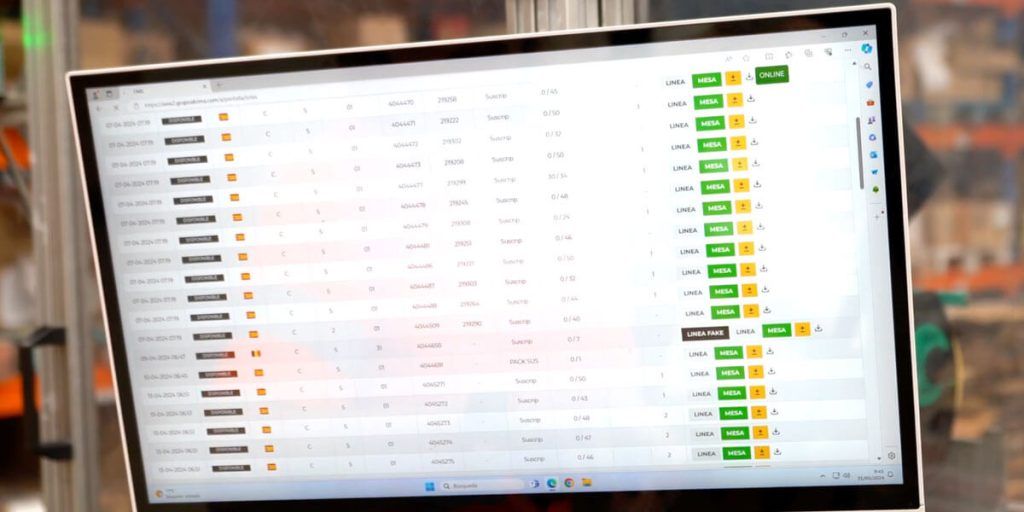
FEFO stands for First Expired, First Out: whatever expires first goes out first, even if it arrived later. It is the usual rule in food and the basis for meeting the minimum shelf life each customer demands. Ask for the system to direct picking with code, batch and date validation on every line, rather than relying on the operative's judgement.
Self-checks based on APPCC (HACCP)
Article 5 of Reglamento (CE) 852/2004, on the hygiene of foodstuffs, requires food business operators to put in place, implement and maintain permanent procedures based on the APPCC principles (hazard analysis and critical control points, HACCP). AESAN publishes guides to good hygiene practice and to implementing APPCC.
Health registration
Article 6 of the same regulation requires establishments where food is produced, processed or distributed to be notified to the competent authority for registration. In Spain, the Registro General Sanitario de Empresas Alimentarias y Alimentos (RGSEAA) (Spain's general health register of food businesses) includes, according to AESAN, storage, distribution and transport activities, and is governed by Real Decreto 191/2011 (Spanish royal decree). AESAN itself points out that there are other regional registers. Always ask for the registration number of the specific centre that will store your product.
Voluntary certifications
ISO 9001, IFS Logistics, BRCGS Storage and Distribution or ISO 22000 are not mandatory, but retail chains frequently ask for them. Always check which centre and which activity each certificate covers.
How does logistics change depending on the sales channel?
- Large retailers and retail. Deliveries to retail chain platforms with pre-booked slots, labelled pallets, agreed minimum shelf life and penalties for delays, shortages or short-dated stock. The coordination of routes and dispatches to platforms and points of sale matters as much as the warehouse.
- Distributors and wholesalers. Orders of full cases or pallets, with visible batch numbers and correct documentation.
- Foodservice. Smaller, more frequent orders, tight delivery windows and a wide mix of product lines.
- Ecommerce. Single-item shipping to the end consumer. If this is your main channel, the group has a dedicated operation for food fulfilment for online shops at Bolian Logistics; this guide focuses on the B2B side.
Which food logistics operators are there in Catalonia?
We set out what each operator publishes on its official website, without judgements. The order is not a quality ranking: each one meets a different need, above all depending on temperature.
1. Grupo Akoma
B2B logistics operator since 1991 with four own centres in the province of Barcelona (Lliçà d’Amunt, Barberà del Vallès, Caldes de Montbui and Martorelles) and 73,000 m². It lists ISO 9001 certification and, on its corporate page, the Registro Sanitario de Industrias y Productos Alimentarios de Cataluña (RSIPAC, Catalonia's food industry health register). On its food logistics service page with batch, expiry and FEFO control it describes receiving with document and packaging checks, storage according to format and turnover (cases, bags, cartons and rigid or semi-rigid containers), replenishment for retail, distribution and foodservice, and integration with ERP, ecommerce and marketplaces, with 99.9% accuracy. Its case studies include Cacaolat, with surplus storage and direct loading to points of sale in Catalonia and the Balearic Islands. It does not list refrigerated or frozen storage. It works from 100 pallets or 1,000 shipments a month. Best suited if your product does not need refrigeration and you sell to chains, distributors and foodservice from a single stock.
2. STEF
It presents itself as a European specialist in the temperature-controlled transport and logistics of food products, with more than 40 multi-temperature platforms in Spain. It states that its Barcelona platform holds ISO 28000 certification and its Olot platform IFS. It has announced the construction of STEF Barcelona Sur in Sant Vicenç dels Horts, specialising in frozen goods at −25 °C, and the acquisition of Transportes Badosa, in Les Preses (Girona). It offers solutions for the food industry, retail and food service. Best suited if you handle fresh or frozen products and need a national and European network.
3. Logifrio
It operates in Spain and Portugal and stores, prepares and distributes food from −25 °C to +18 °C (frozen, chilled and ambient). It lists more than 30 multi-temperature platforms on the mainland and the islands, IFS Logistics and BRC Storage and Distribution certifications, and Barcelona among the centres on its quality page. It is part of the European Food Network. Best suited if you have ranges at several temperatures and want a single operator for all of them.
4. Primafrio
Logistics and transport operator specialising in temperature-controlled goods, with a presence in 30 European countries and North Africa and Authorised Economic Operator certification. In Catalonia it lists a site in Vilamalla (Girona) with a 30,000 m² refrigerated warehouse, 8,000 m² of frozen storage, 6,000 m² of ambient storage and a temporary storage facility, and another in Vilanova de la Barca (Lleida) with a 1,100 m² refrigerated warehouse. Best suited if you export or import by road with refrigeration and want a base close to the French border.
5. Montfrisa
It describes itself as a logistics operator in the frozen food sector, with more than 100 years of experience. It lists a warehouse in El Prat de Llobregat with capacity for 7,725 pallets at −25 °C, picking at −18 °C and dispatch prioritised by FEFO. Its Valencia site holds IFS Logistic certification. Best suited if all your product is frozen and you need to prepare orders without taking it out of the cold room.
6. Frimercat
Cold storage operator in Mercabarna with positive and negative temperatures from −25 °C to 10 °C and 115,000 m³ in two cold storage centres. Since taking over Interfrisa in 2020 it has a platform with centres in Terrassa and Mercabarna. It handles fruit, vegetables, dairy, ice cream, meat, fish, bakery and frozen dough, with a customs warehouse and distribution. Best suited if you sell fresh or frozen products to wholesalers and distributors in the Barcelona area.
7. Disfrimur
A family business in the transport and logistics of food and consumer goods, with its own single-, dual- and multi-temperature fleet, ISO 9001 and ISO 14001 certifications and branches along the Mediterranean corridor, including Barcelona and Tarragona. Best suited if what you need is refrigerated distribution transport, not a warehouse.
| Operator | Presence in Catalonia it lists | Temperatures it lists | Certification or registration it lists |
|---|---|---|---|
| Grupo Akoma | Lliçà d’Amunt, Barberà del Vallès, Caldes de Montbui, Martorelles | No cold storage listed | ISO 9001; RSIPAC |
| STEF | Barcelona, Olot, Sant Vicenç dels Horts (announced), Les Preses | Temperature-controlled; frozen at −25 °C | ISO 28000 (Barcelona); IFS (Olot) |
| Logifrio | Barcelona | From −25 °C to +18 °C | IFS Logistics; BRC Storage and Distribution |
| Primafrio | Vilamalla (Girona), Vilanova de la Barca (Lleida) | Refrigerated, frozen and ambient | Authorised Economic Operator |
| Montfrisa | El Prat de Llobregat | Frozen at −25 °C; picking at −18 °C | IFS Logistic (Valencia site) |
| Frimercat | Mercabarna and Terrassa | From −25 °C to 10 °C | Not specified on the page consulted |
| Disfrimur | Branches in Barcelona and Tarragona | Single-, dual- and multi-temperature fleet | ISO 9001; ISO 14001 |
What should you ask for before signing with a food logistics operator?
- Health registration number of the specific centre where your product will be stored and the activities it covers.
- Current certificates with their scope: which centre, which activity and which temperature.
- The warehouse's APPCC (HACCP) plan: cleaning, pest control and, where applicable, temperature records.
- Traceability demonstration: how they record batch and expiry date on receipt and how they appear on the delivery note.
- FEFO rule and minimum shelf life per customer configured in the system, with alerts for stock nearing its expiry date.
- Recall drill: how long it takes them to block a batch and list who it was sent to.
- Experience with delivery bookings at distribution platforms and their rejection rate.
- Integration with your ERP to see stock, batches and orders in real time.
- Minimum volume and capacity to absorb seasonal peaks.
If you want to see where we operate, take a look at the centres and services of our logistics operator in the province of Barcelona. And if your product does not need refrigeration, tell us about your operation on the page for requesting a proposal from our sales team or first take a look at our logistics for food and drink brands.
Grupo Akoma · Since 1991
Looking for a logistics operator for your food brand?
We store and prepare orders for retail, distribution and foodservice with batch, expiry and FEFO control at our centres in the province of Barcelona. Tell us about your operation and we will prepare a proposal.
Frequently asked questions
What is food logistics?
It is the management of the storage, order preparation and transport of food and drink with control of batch, expiry date and storage conditions, from the manufacturer or importer to the point of sale, the restaurant or the consumer.
What is the difference between dry, chilled and frozen logistics?
The storage temperature. Dry or ambient logistics does not need a cold room but does need batch, expiry and pest control; chilled logistics works with controlled positive cold; frozen, with negative cold. Each requires different facilities and vehicles, which is why the first filter when choosing an operator is your product's temperature.
What is FEFO in food logistics?
First Expired, First Out: the batch that expires first goes out first, even if it arrived later. It reduces losses due to expiry and helps meet the minimum shelf life required by chains and distributors.
Which regulations govern food traceability?
Reglamento (CE) 178/2002 states in Article 18 that traceability must be ensured at all stages of production, processing and distribution. Each operator must be able to identify who supplied it with a food and which businesses it supplied that food to.
Does a food logistics warehouse need health registration?
Reglamento (CE) 852/2004 requires establishments where food is produced, processed or distributed to be notified to the competent authority for registration. In Spain, AESAN states that the RGSEAA covers storage, distribution and transport activities, and points out that regional registers also exist.
Is APPCC (HACCP) mandatory for a logistics operator?
Article 5 of Reglamento (CE) 852/2004 requires food business operators to put in place, implement and maintain permanent procedures based on the APPCC principles. Ask the operator to show you how it applies them in its warehouse.
Does Grupo Akoma store chilled or frozen products?
It does not list this on its website. Its food logistics service focuses on batch and expiry control, FEFO and order preparation for retail, distribution and foodservice. For chilled or frozen products, consult operators specialising in temperature-controlled logistics.
What volume does Grupo Akoma work from?
Grupo Akoma works with brands from 100 pallets or 1,000 shipments a month, from its four own centres in Lliçà d’Amunt, Barberà del Vallès, Caldes de Montbui and Martorelles.
Sources
- Reglamento (CE) 178/2002, general principles and requirements of food law (EUR-Lex)
- Reglamento (CE) 178/2002 (copy of the Official Journal of the EU in the BOE)
- Reglamento (CE) 852/2004 on the hygiene of foodstuffs (EUR-Lex)
- Reglamento (CE) 852/2004 (copy of the Official Journal of the EU in the BOE)
- AESAN: food safety and traceability
- AESAN: food hygiene
- AESAN: Registro General Sanitario de Empresas Alimentarias y Alimentos
- Real Decreto 191/2011 on the RGSEAA (BOE)
- Grupo Akoma: food logistics
- Grupo Akoma: about us and certifications
- Grupo Akoma: Cacaolat case study
- STEF España
- STEF: food industry
- STEF: Barcelona platform with ISO 28000
- STEF: Olot platform with IFS
- STEF: construction of STEF Barcelona Sur
- STEF: acquisition of Transportes Badosa
- Logifrio: home
- Logifrio: quality and certifications
- Primafrio: home
- Primafrio: logistics services and warehouses
- Primafrio: sites
- Montfrisa: home
- Montfrisa: warehouse and picking
- Montfrisa: contact and Barcelona site
- Frimercat: cold chain logistics
- Disfrimur: home and branches
- Disfrimur: about us
- Disfrimur: where we are
- Disfrimur: fleet
Information taken from each company's public website as of November 2026. Third-party data is quoted as published by each company and may have changed; check their website for current information.