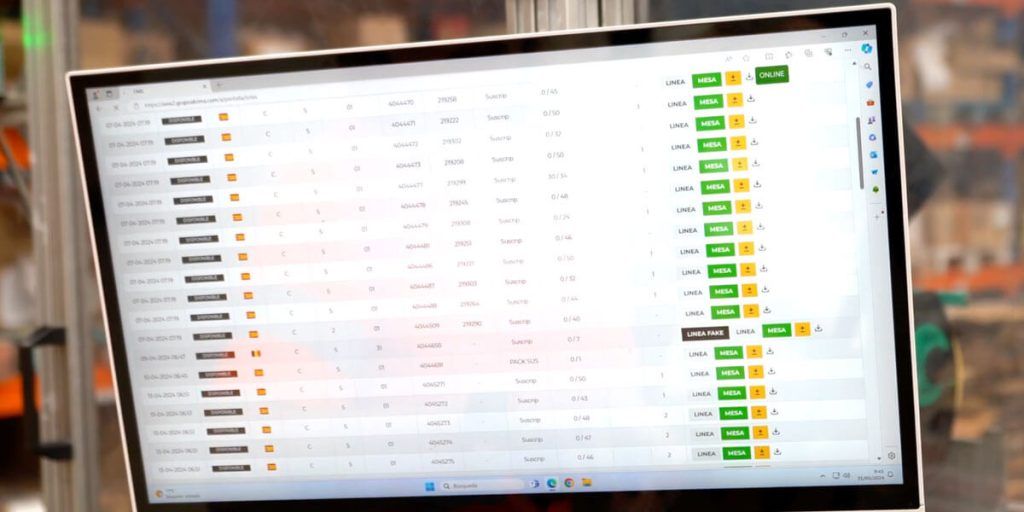
Digital supply chain management demands pinpoint accuracy. Unlike the traditional physical channel, the online environment is governed by immediacy in delivery times and high volatility in order volumes. To better understand this paradigm shift, we recommend reviewing our analysis on e-commerce logistics vs traditional logistics, where we detail the direct operational impacts on the warehouse.
Operational challenges in online order fulfilment
Order picking and packing are no longer mere warehousing tasks. Order fragmentation —many single-line, single-unit orders— increases the cost per dispatch if you do not have automated processes or dedicated zones. This becomes especially complex when you manage multi-channel catalogues or combine stock keeping units with strict regulatory requirements, as seen in the workflows detailed in our guide on the ISO 22716 standard applied to manipulation.
Furthermore, rapid responsiveness depends on optimal stock location. Having prepared and strategically situated facilities, such as our Montornès del Vallès town centre, allows transit times on the main mainland and European distribution routes to be cut.
How to choose a specialised 3PL operator
Outsourcing operations to a logistics partner requires evaluating more than just the rate per square metre. You need real-time visibility through EDI or API integrations with your sales platform, as well as guarantees regarding the physical and fire safety of the facilities, a critical point evaluated in centres with high intrinsic risk level 8 warehouse.
A good partner doesn't just store and dispatch; they also provide the flexibility to absorb seasonal peaks in demand (Black Friday, Christmas campaigns) without neglecting quality standards or processes. handling and co-packing required for promotional kits or custom packs.
Frequently asked questions
What differentiates e-commerce logistics from conventional logistics?
E-commerce logistics processes high-frequency single-unit orders and demands delivery times of under 48 hours. Conventional logistics prioritises the dispatch of full pallets to large retail stores or wholesale distributors.
How does the location of the warehouse influence shipping costs?
Choosing a logistics centre close to major transport hubs reduces last-mile costs and shortens transit times to national and international distribution hubs.
Is an integrated Warehouse Management System (WMS) necessary?
Yes. The integration between your online store and the 3PL operator's WMS prevents out-of-stock situations, synchronises inventory in real time and minimises human error in order fulfilment.
How are seasonal demand spikes managed?
Through prior planning of storage capacity, flexible operational staff and optimised preparation processes that prevent bottlenecks in the dispatch area.