The flexible logistics It is the ability of a logistics operation to adapt warehouse space, personnel, processes, and transportation to the actual volume at any given time, without the cost or level of service skyrocketing. Instead of sizing up operations for the peak of the year (and paying for it twelve months in advance), scaling up or down according to demand.
For a supply chain manager, the question is no longer whether demand will change, but how much it costs you each time it does. We explain what flexible logistics is, what its advantages are, and how to apply it.
What is flexible logistics and why it has gained popularity
Three factors have pushed many companies to become more flexible in their logistics:
- Seasonality and campaigns: Christmas, sales, Black Friday or launches multiply the volume for a few weeks.
- Omnichannel: The same stock has to serve stores, distributors, e-commerce and marketplaces, with orders of very different sizes and urgency.
- Returns: In online sales, a significant percentage of orders return to the warehouse and they need to be reviewed and refunded quickly.
Rigid logistics (own warehouse, fixed workforce, processes designed for a single channel) responds to these changes with overtime, stock shortages, or paid empty space. Flexible logistics absorbs them.
Advantages of flexible logistics for B2B companies
- You pay for what you use: The cost of storage and the preparation of orders is in line with the actual volume, not the theoretical maximum.
- Stable service level at the peaks: The operator is strengthening teams and shifts so that delivery deadlines are not compromised during the campaign.
- Less fixed investment: You don't need to expand your warehouse, buy shelves, or hire a structural team to cover a few weeks of peak demand.
- Quick response to unforeseen events: an extraordinary order, a change of supplier or a product recall are managed without interrupting the operations.
- Scalability: Opening a new channel or entering another market does not require redesigning the entire logistics system.
Flexible storage: space that grows and shrinks with you
Flexible storage is the most visible part of flexible logistics. It consists of having additional locations only when you need them: campaign stock, production surpluses, promotional material, or goods awaiting distribution. Outside of those periods, the space is freed up and no longer billed.
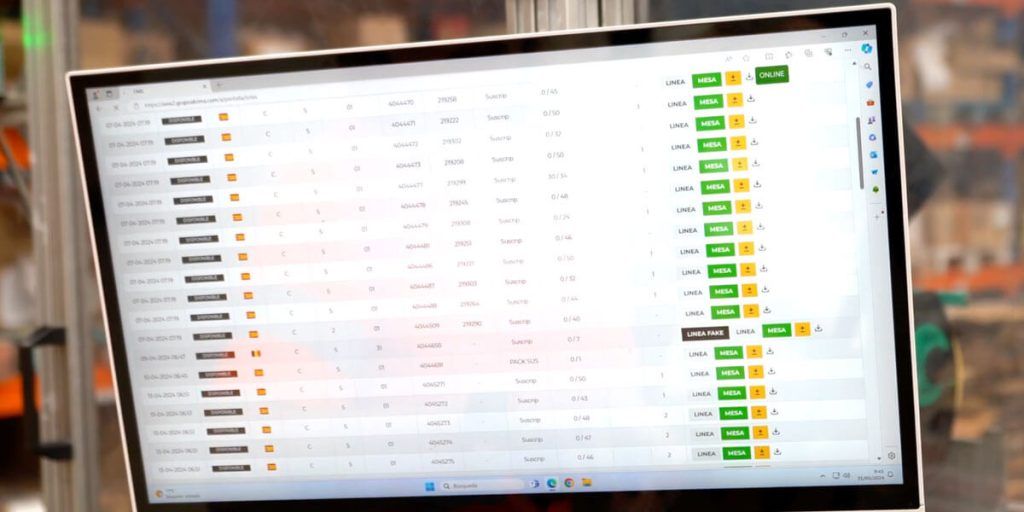
For it to work, the operator needs available capacity and a warehouse management system (WMS) that provides real-time visibility of inventory, wherever it is.
How to apply flexible logistics in your company
- Measure your seasonality: It analyzes the entries, exits, and orders per week over the last two years to see how much your volume varies and when.
- Separate the base from the peak: decide which part of the operation is stable (and can be kept the same) and which part is worth outsourcing or being flexible with.
- Integrates systems: Connect your ERP or online store with the operator's WMS so that orders and stock flow without manual intervention.
- Agrees on scaling rules: Set with your logistics operator advance notice periods, guaranteed maximum capacity and peak rates.
- Check the indicators: It controls the cost per order, the level of service and occupancy to adjust the model each season.
How we work with flexible logistics at Grupo Akoma
From our centers in the Vallès (Barcelona), we adapt space, equipment, and processes to each client's operations: warehousing, order preparation, handling and co-packing, transportation, and returns. We do this with customized projects and a technological platform that connects your stock and your orders in real time.
You can see the details of the service in Comprehensive warehousing and logistics or, if your operation moves a lot of volume, on our page Logistics operator for large volumes. Do you want to know how it would adapt to your seasonality? Tell us about your case.
Frequently asked questions
What is flexible logistics?
It is a model in which the storage space, personnel, and processes are adjusted to the actual volume of activity, so that the company pays for what it uses and maintains the service level during peak demand periods.
What is the difference between flexible logistics and flexible storage?
Flexible storage is limited by space: locations are contracted and released as needed. Flexible logistics also includes order preparation, transportation, handling, and returns.
Which companies benefit most from flexible logistics?
Those that have a marked seasonality sell through several channels or are growing rapidly: cosmetics, food, fashion, publishing, and e-commerce, among others.