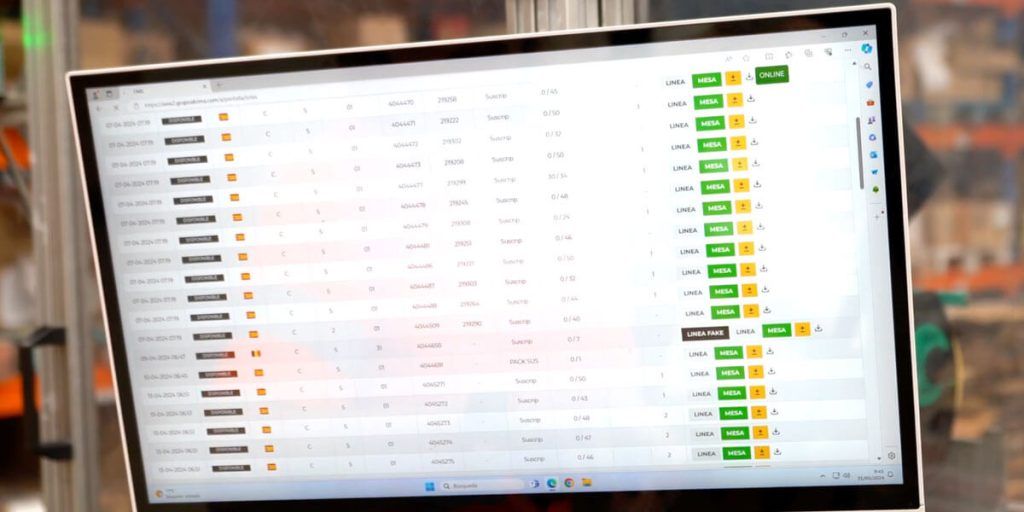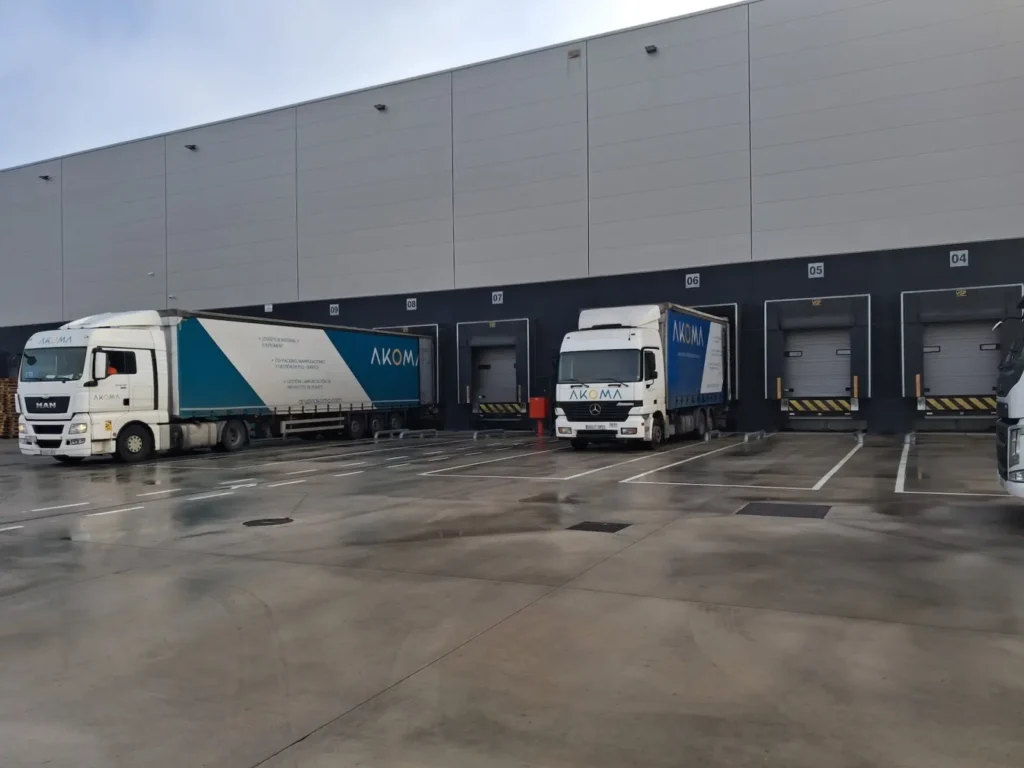
Short answer: Christmas peak logistics for toys and FMCG is decided between June and September, not in December. For a manufacturer or brand supplying retail chains, toy shops, hypermarkets and distributors, preparing for the peak means reserving pallet space for the stock that arrives in summer and autumn, organising container unloading, preparing orders for stores and distribution centres in line with each chain's delivery appointments, and agreeing capacity and service KPIs in writing with the operator. If you have not done so yet for 2026, do it now for Epiphany (Three Kings' Day, 6 January) and for the 2027 peak.
Transparency: this article is published by Grupo Akoma. Third-party data comes from their official websites and is linked under “Sources”.
What makes Christmas peak logistics different in the B2B channel?
Most guides to the Christmas peak focus on parcels to consumers: Black Friday, carrier cut-off times and online returns. The problem facing a toy manufacturer or an FMCG brand selling to retail is a different one. Its peak is not thousands of small parcels, but hundreds of pallets that arrive all at once, are stored for weeks and leave in large orders for retail chains' distribution centres and for hundreds of stores.
Those weeks carry enormous weight. According to projections by the Spanish Toy Manufacturers' Association (AEFJ) reported by CIO España, the Christmas season accounts for around 60% of annual toy sales. In FMCG the pattern repeats with turrón (Spanish nougat), drinks, perfumery and gifts: the trading year is decided in just a few weeks.
In B2B there are also three differences that shape the whole plan:
- The customer sets the rules. Each chain sets its own delivery windows, pallet format, labelling and documentation. A lorry that arrives outside its slot or with a wrongly labelled pallet can be turned away at the dock.
- Stock arrives before demand. Product manufactured in Asia is shipped in summer and must be in the warehouse before the chains place their seasonal orders.
- The volume is temporary. What is 300 pallets in July can triple by October and return to normal in February. Sizing your own warehouse for that peak means paying for empty space for the rest of the year.
What does the Christmas peak calendar look like, from July to January?
The calendar varies by category and by chain, but in toys and FMCG the usual pattern is as follows:
| Period | What happens in the supply chain | What you should have sorted |
|---|---|---|
| April–June | Peak-season forecast and purchase orders to the factory | Monthly pallet forecast and initial talks with the operator |
| July–September | Container arrivals and local seasonal production | Space reserved, unloading plan and new SKUs set up |
| September–November | Chains' seasonal orders and shelf filling | Picking capacity, delivery appointments and transport booked |
| Late November | Black Friday (27 November 2026) and first replenishments | Real-time stock visibility and customer priorities |
| December | Urgent replenishments and last-minute orders for Epiphany | Extended shifts and daily dispatches to stores and distribution centres |
| January–February | Store returns, surplus stock and freeing up space | Inspection criteria for returned product and exit date from temporary space |
In practice, each phase depends on the one before. If the space is not reserved in June, the August container has nowhere to be unloaded; if the container is unloaded late, the chain's October order goes out incomplete. That is why a good peak-season plan is written backwards, starting from each customer's last delivery date.
How should you size pallet capacity and temporary space?
The first figure you need is the maximum weekly pallet occupancy, not the yearly average. Take your inbound, outbound and stock history for the last two years, add the expected growth and mark the week of peak occupancy. That figure, and how many weeks it stays above normal, is the basis for the conversation with the operator.
With that figure you decide which part of the volume is stable and which is seasonal. Stable stock can stay where it is; seasonal stock is the candidate for temporary space that you contract for a few months and then release. This is what we call flexible logistics: space and teams that adjust to actual volume, without expanding your warehouse or hiring permanent staff for a peak lasting just a few weeks.
Three questions help fine-tune it:
- What storage system does each SKU need? Conventional racking for large numbers of medium- or fast-moving SKUs; floor block stacking for bulky or single-SKU product; an automated warehouse for large volumes of reserve stock.
- What are the dimensions and heights of your pallets? Toys are bulky and light: a tall pallet of large boxes takes up a whole location even though it weighs little.
- When does the last peak-season pallet leave? Set from the outset the date on which the space is released and what happens to the surplus.
An example of this model is the LVTmoto case, in which Akoma acts as a logistics buffer for bulky product: additional storage capacity to absorb inbound peaks without expanding their own facilities, with stock controlled by unit. At Grupo Akoma, seasonal storage is a regular part of our seasonal pallet storage in the Vallès, with racking, floor storage and an automated warehouse across four company-owned sites.
How should container receiving and unloading be organised?
Receiving is the most underrated bottleneck of the peak. Between August and October, import containers, local production and the first seasonal dispatches all converge on the dock. If unloading is delayed, the stock exists but is not available to sell.
What you should agree with the operator before the first container:
- Advance notice of arrival, with container number, estimated date and a list of SKUs and quantities.
- Type of load. A container of loose-loaded cartons requires more hours of unloading and palletising than one that arrives palletised. Tell the operator so they can plan staffing.
- Inbound checks of SKUs, quantities and carton condition, with discrepancies logged and reported the same day.
- Advance set-up of new SKUs, with dimensions, units per carton and per pallet and barcode, so goods can be put away as soon as they are unloaded.
- Products with special requirements. Many electronic toys contain lithium batteries. In the Buzz Power Banks case, a flexible 3PL for products with batteries, Akoma uses a separate storage zone, package checks on receipt and batch control.
The useful rule is to measure the time between the container's arrival and stock being available in the system. Ask for that lead time in writing for the peak season, not for a quiet week.
How should orders for stores, retail chains and distribution centres be prepared?
During the peak, two types of order coexist. Large orders to the chains' distribution centres, often full pallets or mixed-SKU pallets, and orders to stores, toy shops and distributors, which are smaller and have many lines. Each needs its own picking method: full-pallet dispatch, case picking or unit picking.
In the retail channel an order is not properly prepared simply because it contains the right units. Chains usually require:
- A logistics label on every pallet, usually with the SSCC code from the GS1 standard, which identifies the logistic unit.
- Delivery note and despatch advice that match the purchase order exactly.
- Pallet format and maximum height in line with the destination centre's rules.
- Delivery appointment booked in the time slot allocated by the distribution centre.
Delivery appointments deserve a plan of their own. In November and December the chains' distribution centres have saturated docks and free slots run out quickly. Agree with the operator who books the appointments, how far in advance, and what happens if a lorry misses its slot.
Transport closes the loop: full-pallet dispatches, groupage for stores and parcel shipments for small orders. At Grupo Akoma we coordinate pallet, parcel and groupage dispatches with trusted carriers across Spain and Europe from sites next to the AP-7 and C-17 motorways, and we pick more than 50,000 order lines a day with 99.9% picking accuracy.
Which KPIs should you track during the Christmas peak?
During the peak there is no time to analyse twenty indicators. Five are enough to stay in control:
- OTIF (On Time In Full): percentage of orders delivered on time, complete and with the correct documentation. It is the indicator the chains look at. We explain it in our guide to OTIF and how to improve this KPI.
- Receiving lead time: hours from the container's arrival until stock is available.
- Inventory accuracy: match between system stock and physical stock. If it fails, orders are confirmed that cannot then be fulfilled in full.
- Orders picked versus orders received each day, to spot a backlog before it turns into a delay.
- Pallet occupancy against the reserved space, to expand or release it in time.
Agree the format of the daily or weekly report in September. Asking for it in the middle of the peak is too late.
What should you ask for before signing with a logistics operator for the peak season?
- Capacity reserved in writing: number of pallets per month and entry and exit dates for the temporary space.
- Unloading and put-away lead time for containers in the peak season.
- Picking capacity in the peak week: orders and lines per day it can handle and how it adds shifts.
- Experience with retail chain distribution centres: pallet labelling, documentation and delivery appointment management.
- Integration with your ERP to receive orders and see stock in real time, tested before the peak.
- Agreed KPIs, such as OTIF and inventory accuracy, with regular reports to check them.
- January returns plan: product inspection, return to stock and what is done with items that are not in good condition.
- Certifications and references that can be verified, such as ISO 9001, and customer cases with volumes similar to yours.
If you want to compare more criteria, see our guide on what to compare when contracting pallet storage in Barcelona and the Vallès.
When should you talk to the operator and what information should you bring?
Months in advance. Ideally you should close the Christmas peak between April and June, before the containers arrive; September is already too late to reserve space with any margin. For Epiphany and January returns, November is the last reasonable moment. And if the peak caught you without capacity this year, January is the best month to prepare the 2027 peak with fresh data.
Bring to the first meeting:
- Weekly inbound, outbound and stock history for the last two peak seasons.
- Monthly pallet and container forecast, with dimensions.
- List of customers and channels: chains, distribution centres, stores, distributors and export.
- Each chain's requirements: labelling, documentation and delivery windows.
- SKUs with special requirements, such as products with batteries.
At Grupo Akoma we have been operating since 1991 with 73,000 m² across four company-owned sites in Lliçà d’Amunt, Barberà del Vallès, Caldes de Montbui and Martorelles, and we usually start from 100 pallets or 1,000 shipments a month. If you are looking for a single team for receiving, warehousing and distribution, see our warehousing and integrated logistics service for peaks and seasonal campaigns or the page on our logistics operator in Barcelona with company-owned warehouses in the Vallès. And if what you are short of is space for peak-season stock, start with our pallet storage service for businesses with seasonal peaks.
Grupo Akoma · Since 1991
Short of space for your peak-season stock?
Seasonal pallet storage, container receiving and distribution to retail chains and stores from four company-owned sites in the Vallès. Share your forecast and we will prepare your peak season.
Frequently asked questions
How far in advance should Christmas peak logistics be prepared?
It is advisable to close capacity and terms with the operator between April and June, before the summer containers arrive. It is still possible in September, but with less leeway on space and delivery appointments.
When does the Christmas logistics peak start for toys?
In the warehouse it starts in summer, with the arrival of import containers and seasonal production. Chain orders are concentrated between September and November, urgent replenishments in December and store returns in January.
What is temporary warehouse space?
It is pallet locations that you contract only for the peak season and release when it ends. They let you absorb seasonal stock without expanding your warehouse or paying for empty space for the rest of the year.
What is a delivery appointment at a distribution centre?
It is the time slot allocated by a chain's distribution centre for unloading a lorry. If the transport arrives outside that slot or the goods do not meet its labelling and documentation requirements, the delivery can be rejected.
Which KPI matters most when supplying large retail chains?
OTIF, which measures the percentage of orders delivered on time, complete and with the correct documentation. It is the indicator many chains use to assess their suppliers.
What information does the logistics operator need to quote for the peak season?
Weekly inbound, outbound and stock history, monthly pallet and container forecast, pallet dimensions, customers and channels, each chain's requirements and SKUs with special conditions.
How are store returns handled in January?
The operator receives and inspects each return, puts items in good condition back into stock and sets the rest aside for the brand to decide what to do with them. It is advisable to agree the inspection criteria and timeframes before the peak.
Can toys with lithium batteries be stored in a logistics warehouse?
Yes, with specific procedures: a separate, signposted zone, package checks on receipt, segregation of damaged units, and packaging and labelling in line with battery transport regulations.
Sources
- CIO España: the Christmas season accounts for 60% of annual toy sales, according to AEFJ projections
- GS1: Serial Shipping Container Code (SSCC)
- Grupo Akoma: pallet storage
- Grupo Akoma: warehousing and integrated logistics
- Grupo Akoma: logistics operator in Barcelona
- Grupo Akoma: OTIF, what it is and how to improve this KPI
- Grupo Akoma: LVTmoto case
- Grupo Akoma: Buzz Power Banks case
Information taken from each company's public website as of November 2026. Third-party data is cited as published by each company and may have changed; check their website for current information.