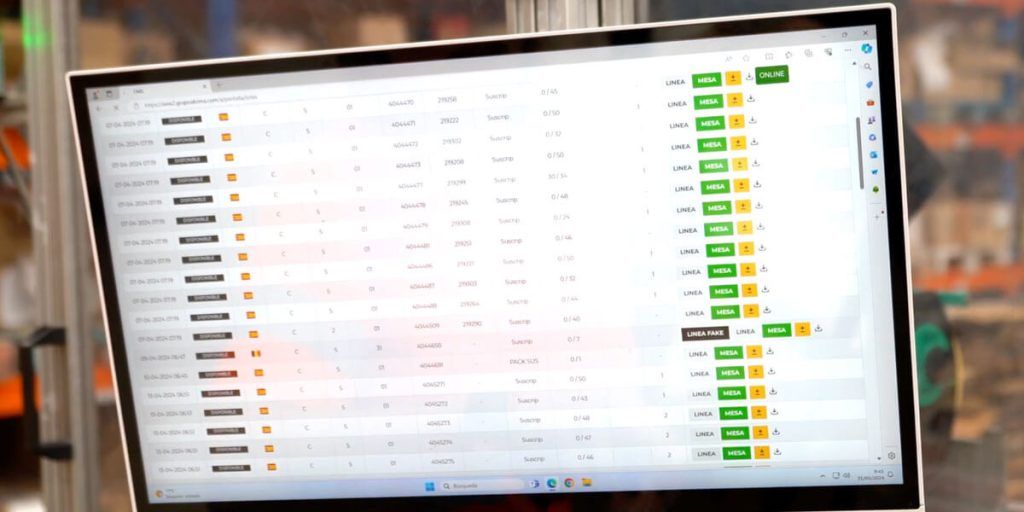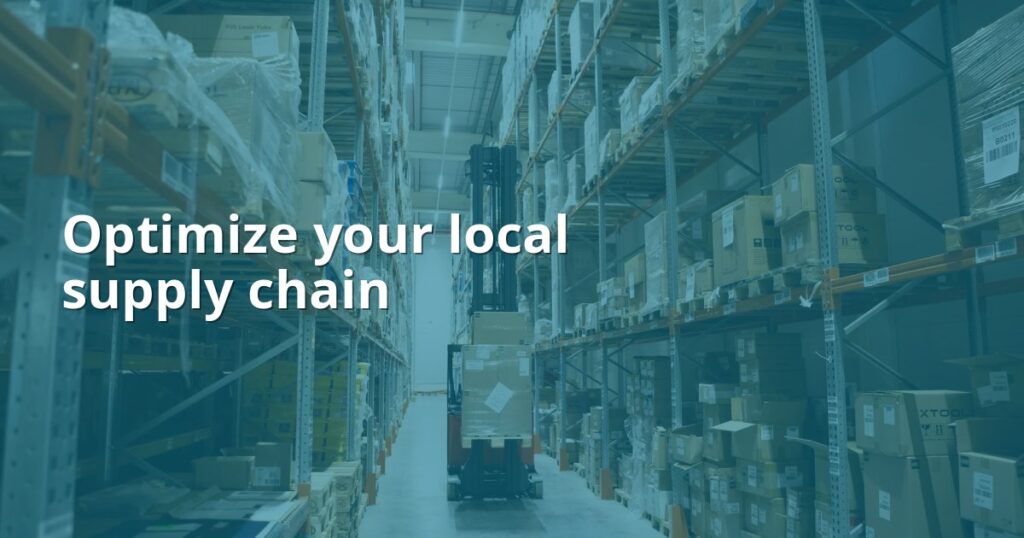
Managing stock and distribution from the Catalan province requires precision. The saturation of the main road axes and the cost of industrial land each condition each route. Working with a Logistics operator in Barcelona It requires more than just renting square meters. You need to integrate smooth flows of goods.
The industrial fabric of the area demands quick responses. A good logistics partner provides visibility over inventory and reduces transit times to the main consumption centers in the Peninsula and Europe.
Criteria for selecting a logistics operator in Barcelona
Not all facilities offer the same technical guarantees. When evaluating infrastructure, you must look beyond the available surface area. The exact location makes a difference in last-mile costs and access to the AP-7 and AP-2 highways.
In addition, the product typology determines the regulatory requirements. For example, if you operate with complex or specific goods, you need adapted spaces. You can review the technical characteristics of specialized facilities as described in our analysis of a 8th level warehouse with high intrinsic risk to understand the fire safety standards and the required compartmentalization.
Strategic location and connectivity
Being close to the port and the airport of Barcelona facilitates imports and exports. However, the logistics centers located in the first and second metropolitan rings (such as Barberà del Vallès or Martorelles) optimize the time for land connections with the Mediterranean corridor.
A well-connected center avoids unnecessary delays in the processing of orders. This directly impacts the level of service measured by your operations department.
Adaptability and value-added services
Basic storage is no longer enough. Companies demand additional processes before the goods reach the final customer or the point of sale. This is where the role of the manipulation and copacking service, Essential for promotional campaigns, product kits, or re-labeling.
Outsourcing these operations avoids bottlenecks in your own structure and allows you to scale the preparation volume according to seasonal demand.
Key metrics to measure operational performance
Delegating operational tasks does not mean losing control. You must require clear performance indicators from your provider. The level of service is evaluated by objective data and not by subjective impressions.
A fundamental indicator to audit your supplier is the percentage of orders delivered on time and complete. You can learn more about its calculation and application in our guide on the OTIF logistics KPI.
Monitoring this indicator prevents penalties from being imposed on your customers and ensures that the supply chain maintains the planned pace without accumulating hidden delays.
Infrastructure and operational centers in the province
The decentralization of storage within the province of Barcelona helps to mitigate the impact of dense traffic. Having operational nodes strategically distributed allows the stock to be brought closer to the delivery point.
To learn in detail how these physical spaces are structured, you can consult the information about our facilities in the Barberà del Vallès town centre, Designed to support demanding industrial operations.
Preguntas frecuentes
What advantages does a logistics operator located in Barcelona offer?
It provides direct access to the main road axes of southern Europe, proximity to the port and airport, and a drastic reduction in transit times for capillary and regional distribution.
How does the location of the warehouse affect transport costs?
A location in the metropolitan industrial rings reduces empty kilometers and access time to the highways, which directly reduces the cost per kilometer in distribution.
What additional services should a logistics operator offer?
In addition to storage and stock management, it must offer value-added services such as quality control, preparation of complex orders, and industrial labeling and handling.
How is the performance of the logistics operator audited?
Through dashboards based on objective KPIs such as OTIF (On-Time In-Full), the rate of incidents due to damage to goods, and the accuracy of cyclical inventories.